Museums & Environmental Contaminants
Museums & Environmental Contaminants
What are PFAS?
Per- and polyfluoroalkyl substances, also known as PFAS, encompass a large class of man-made chemicals. Currently, the U.S. Environmental Protection Agency’s Computational Toxicology Chemicals Dashboard lists 21,028 PFAS with known structures. Differences in PFAS manufacturing, as well as variation in carbon backbone length, charge, and attached functional groups account for the vast diversity across this class of compounds. Despite this variation, all PFAS are characterized by carbon-fluorine bonds. In these fluorocarbons, fluorine atoms are present where hydrogen atoms would naturally be bonded, creating extremely strong bonds that result in chemically inert and thermally stable compounds.
The first PFAS compound, polychlorotrifluoroethylene (PCTFE), invented in 1934, was remarkable for the strong C-F bonds that make this class of compounds well suited for industrial and military applications. In 1938, polytetrafluoroethylene (PTFE) was created by accident, and by the 1940s DuPont began manufacturing the fluorocarbon. PTFE was quickly implemented into military operations that directly supported the Manhattan Project and the development of the atomic bomb in Los Alamos, New Mexico.
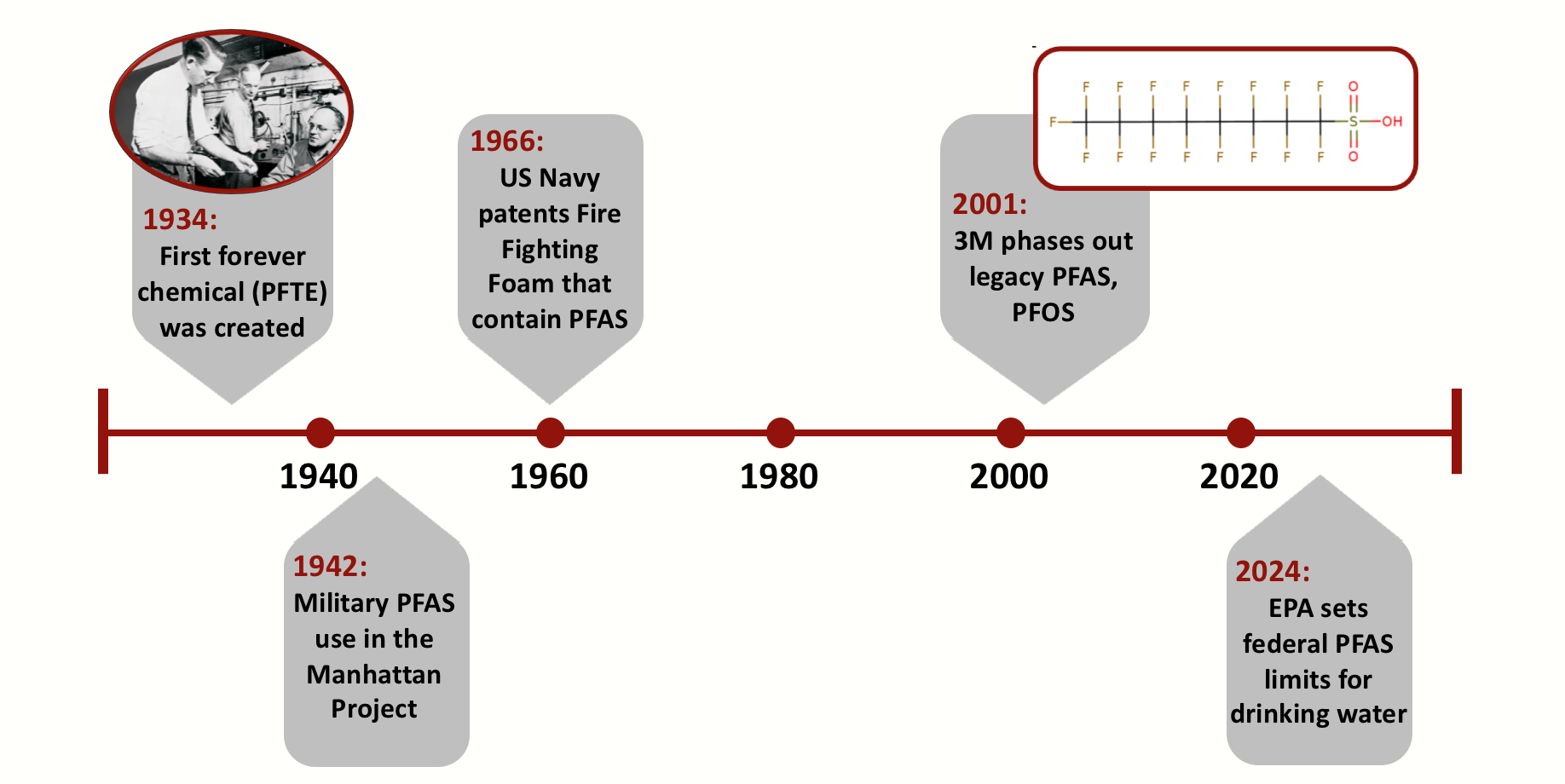
It became apparent to chemists that the particularly strong C-F bonds imparted unique properties to these chemicals. The water repellent, light weight, non-reactive, and heat stable characteristics of PFAS made them well suited for industrial applications and they were quickly implemented into consumer products. Today PFAS are used in many products including Teflon non-stick pans, stain resistant carpets, dental floss, artificial turf, outdoor gear, medical devices, aqueous film forming foams, and manufacturing.
Unfortunately, the same characteristics that make PFAS useful in these products also result in the persistence of these chemicals. PFAS are classified as Persistent Organic Pollutants because of their resistance to biological, chemical, and thermal degradation. While certain PFAS compounds breakdown into transformation products, they still persist in the environment where they can bioaccumulate in water, soil, and tissue. When PFAS bioaccumulate in tissue it can lead to negative health effects. Recent studies have linked PFAS to reproductive issues, thyroid cancer, and colorectal cancer. Therefore, it is important that we continue to investigate routes of exposure and resulting impacts of PFAS.