Museums & Environmental Contaminants
Museums & Environmental Contaminants
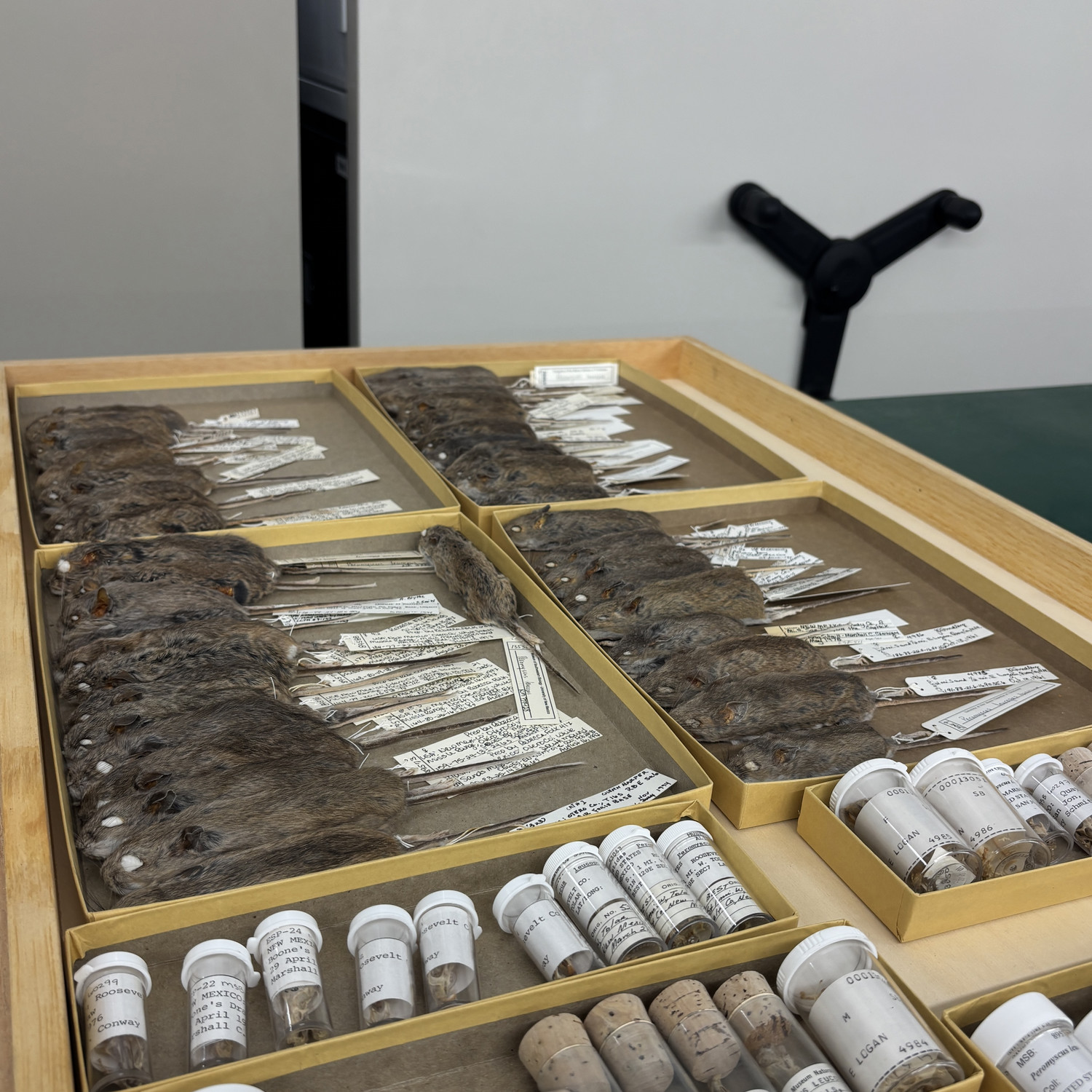
At the Museum of Southwestern Biology, the Division of Mammals cares for a global collection of mammals specimens and associated data that dates back to the 1890s. These specimens are part of a vast biorepository that supports research across diverse biological and environmental fields. Mammal specimens provide a powerful set of data that extend across continents and several decades into the past. As the impact of human activity continues to heighten in nearly every corner of the globe, this archive of mammals allows scientists to rigorously document and investigate changing environmental conditions, including the growing accumulation of contaminants and pollutants.
Museum collections are indispensable in environmental contamination research because they not only provide a nexus for diverse networks of data (chemistry, genetics, pathogens, etc.), but they also facilitate our ability to understand how conditions have changed. Historic specimens capture temporal snapshots of environmental conditions for pollutants such as microplastics, DDT, PFAS, and heavy metals like mercury. Small mammals are key sentinels for environmental toxicology and provide scientific insights into how environmental conditions can result in biological impacts to wildlife and humans. An improved understanding of the distribution, concentration, and uptake of pollutants in wild mammals has direct implications for human health and well-being. Through specimen-based research, we can better understand how varying levels of synthetic chemicals in our environments can result in adverse health effects.
As researchers turn their attention to the increasing accumulation of pollutants in the environment, particularly in the Southwest, they can draw on MSB specimens and tissues that were collected years or even decades prior in order to understand how contaminant levels and compositions have changed over time.