Museums & Environmental Contaminants
Museums & Environmental Contaminants
PFAS in New Mexico
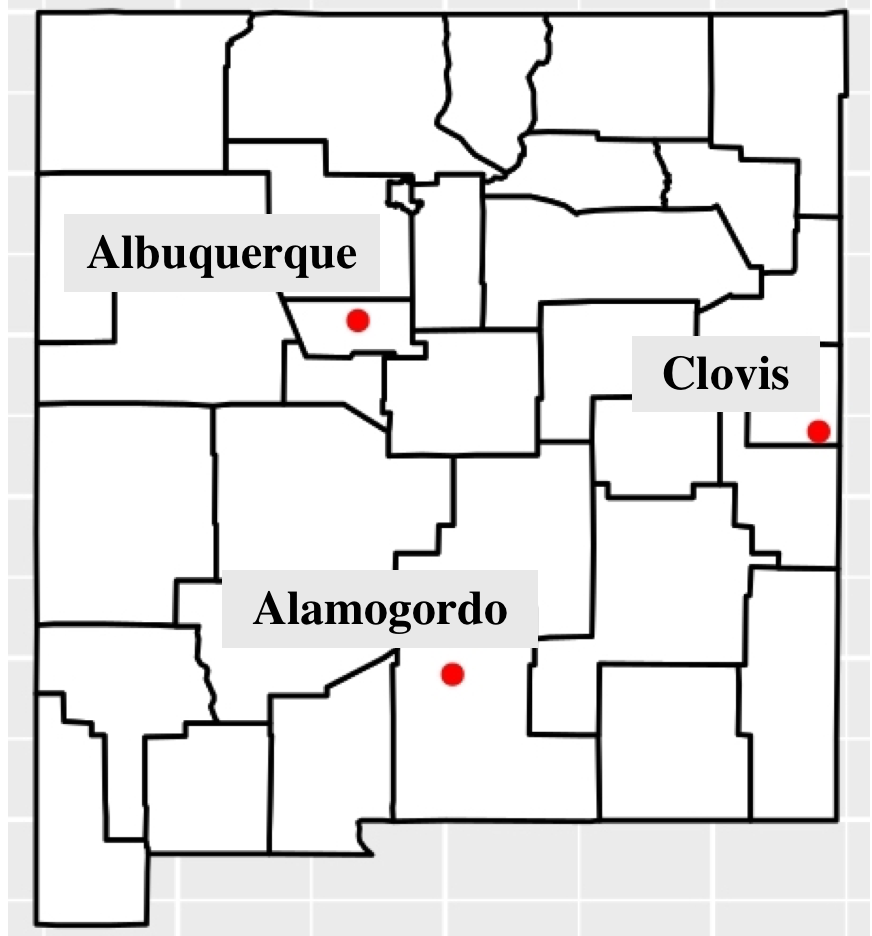
In New Mexico, ongoing research is focused on quantifying PFAS levels in wildlife around Air Force Bases. Recent studies have recorded extremely elevated levels of PFAS around Air Force Bases in the eastern and southern regions of the state due to their use of Aqueous Film-Forming Foams.
Aqueous film forming foams (AFFF) are fire suppressants that contain numerous PFAS compounds. Many forever chemicals act effectively fight fires because of their:
- Resistance to Heat – stable at high temps
- Hydrophilic Regions – affinity for water
- Hydrophobic Regions – water repellent
- Surfactant Properties – preventing reigniting
These key properties generated widespread AFFF use at military bases across the United States for over five decades. However, AFFF deployment at military installations for maintenance testing, training practice, or emergency response creates direct pathways for forever chemicals to enter waterways and environments. Officially patented in 1966 by the U.S. Navy, AFFF formulations have changed over time due to research and regulations, shifting to use shorter chain PFAS instead of longer chain PFAS.
Cannon Air Force Base
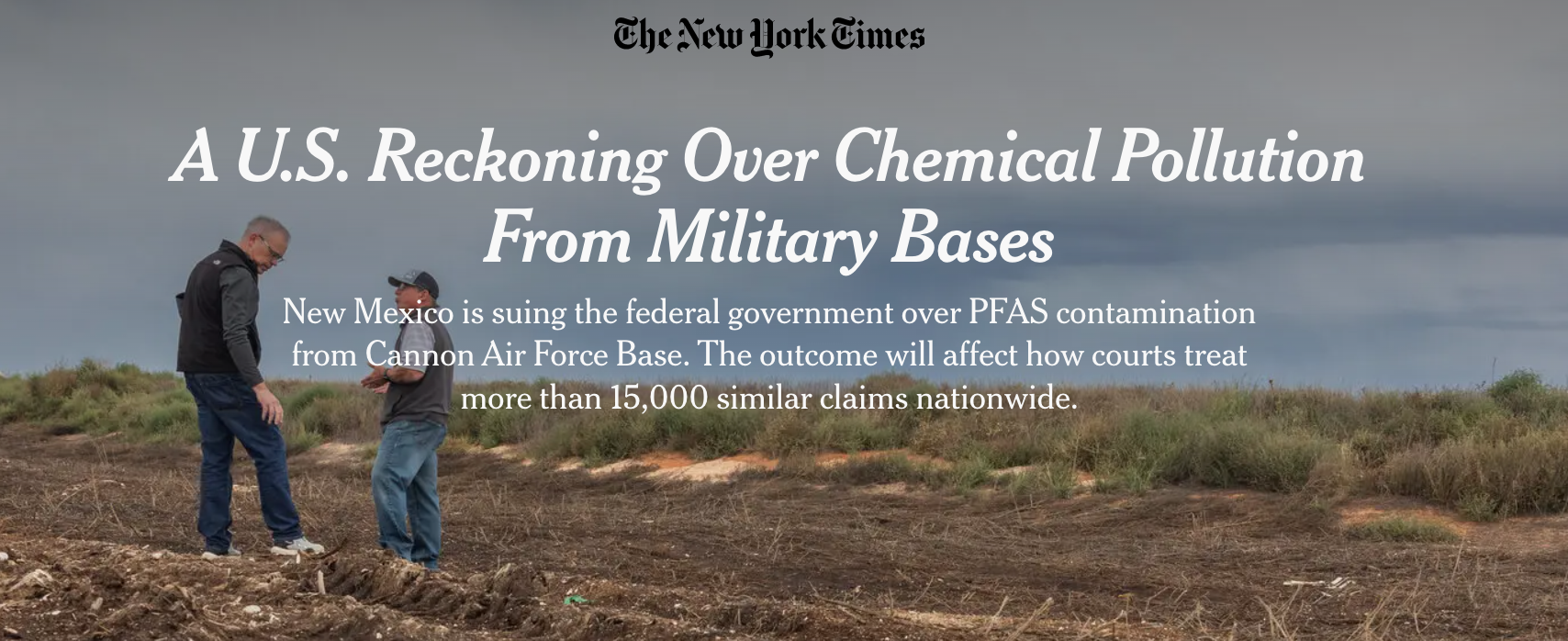
In 2016, two wells reported PFAS levels above national EPA standards On Cannon Air Force Base located outside of Clovis, New Mexico. One of the wells was downgradient from a Fire Training Area where AFFFs were deployed. High PFAS levels were also detected in drinking water beyond the boundary of Cannon AFB. Since the recognition of the PFAS contamination, community public health and the local dairy industry have been negatively impacted. After forever chemicals were detected in milk, three thousand dairy cows were slaughtered due to PFAS contamination. To assess and safeguard public health, the New Mexico Environment Department and the New Mexico Department of Health tested over six hundred blood samples from Clovis residents. Over 99% of participants had PFAS chemicals in their blood, many of which are associated with AFFFs. In this region PFAS have impacted both the lives and livelihoods of the community.
Holloman Air Force Base
In southern New Mexico, west of Alamogordo, Holloman AFB operates near White Sands National Park. At the edge of the base, the Holloman Evaporation Lake holds storm runoff and treated sewage water from the base. The lake and its surrounding oasis environment provide ample habitat for diverse resident and transitory species and functioned as a recreation site for people for decades.
In 2024, researchers from the MSB and University of New Mexico analyzed PFAS levels in 23 species, primarily birds and small rodents, around the Holloman Evaporation Lake. The study determined that 20 of 23 species exhibited heavy contamination levels and a notable 16 out of the 17 tested PFAS types were registered above the reporting limit. While both recent and historic museum specimens were included in the study, one of the highest levels of contamination ever reported in wildlife was recorded from a White-footed mouse (Peromyscus leucopus) collected in 1994. Its liver registered 98,000 ng/g of Perfluoro-octane sulfonic Acid (PFOS).
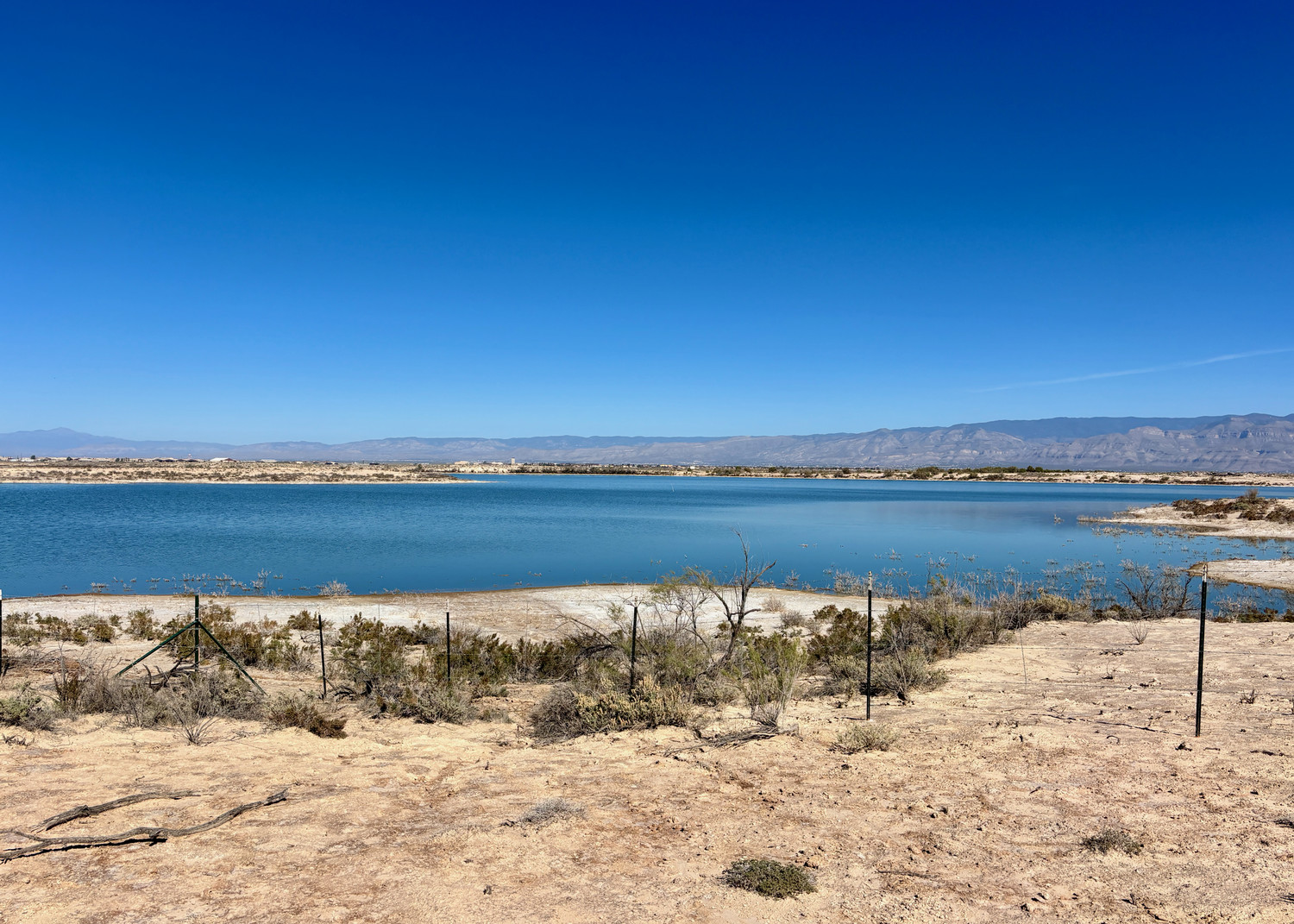
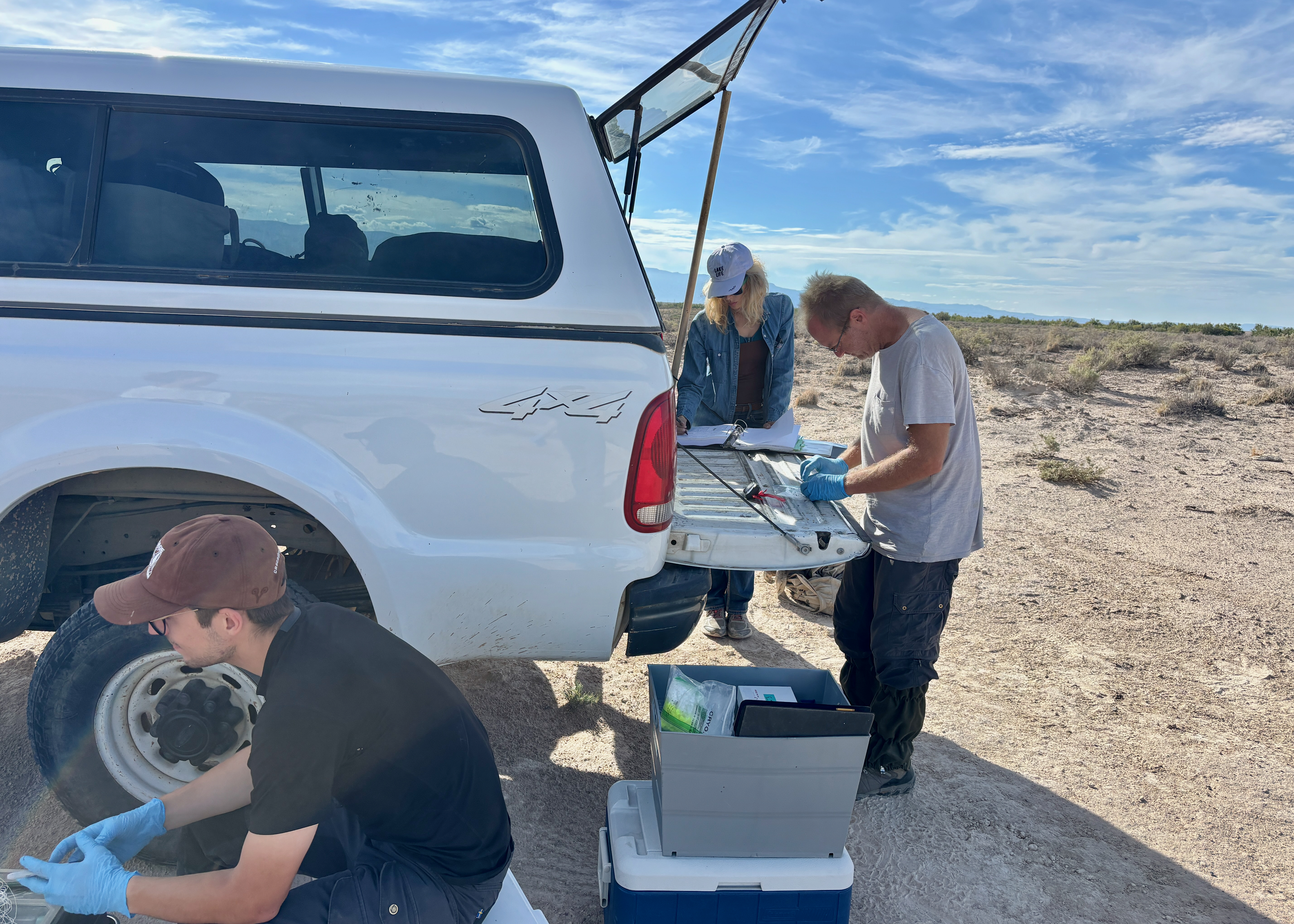
Subsequent research at Holloman Evaporation Lake has now found even higher concentrations (120,000 ng/g) in Kangaroo-rats (Dipodomys merriami) as well as elevated levels in game species such as oryx (Oryx gazella). Expanded MSB sampling is now investigating contamination across the greater ecosystem and includes fish, invertebrates, reptiles, and a greater number of plants. As a result of the MSB’s research findings, Holloman Lake was closed to the public in July 2025.
Kirtland Air Force Base
Kirtland Air Force Base (KAFB) is located at the southern edge of Albuquerque, New Mexico, east of the Rio Grande. With a population around 556,000 people, Albuquerque is the largest metropolitan area in the state. Current activities at KAFB include nuclear research and development, aviation training and deployment, and weapons storage. KAFB has been conducting these activities since 1941 and both historical and ongoing use of AFFFs have provided avenues for PFAS to enter the environment.
Ongoing research is using collections from the Museum of Southwestern Biology to assess if elevated PFAS levels occur in mammals near Kirtland Air Force Base. Three resident rodent species, white-footed mouse, (Peromyscus leucopus), and kangaroo rats (Dipodomys merriami and Dipodomys ordii) were collected in Tijeras Arroyo, a drainage area southwest of KAFB. Two species of carnivore (Canis latrans, Taxidea taxus) were previously collected on base and preserved in the collection. Preliminary results show PFAS in liver and muscle samples of all specimens. With potential further downstream effects in Albuquerque’s South Valley, Isleta Pueblo, and the Rio Grande this study sets the stage for collections-based research to provide an improved understanding of potential impacts on human health, wildlife health, and agriculture.