| |
Welcome to the Museum of Southwestern Biology
The Museum of Southwestern Biology (MSB) is a research and teaching
facility in the Department of Biology, University of New Mexico.
MSB houses collections of vertebrates, arthropods, plants and
genomic materials from the American Southwest, Central and South
America, and from throughout the world. The MSB consists of ten
divisions, one special program (the USGS Arid Lands Field Station)
and an inter-divisional program in biodiversity informatics.
Each division or program sets its own policies for visitors, researchers
and data inquiries. For further information visit the appropriate
division or program web pages.
Congratulations to Kelly Miller on the award of his National Science Foundation Collections Improvement Grant (Reinvest American funds). This award is funded under the American Recovery and Reinvestment Act of 2009 (Public Law 111-5).
The Museum of Southwestern Biology is located in a geographic region of high environmental heterogeneity and arthropod diversity. Additionally, the arthropod fauna of the Southwest is not as well known as other regions of the United States. The Museum of Southwestern Biology has become an active institution documenting insect diversity for several decades for researchers in ecology and taxonomy, but has never had adequate storage space for all its material. The funding from this NSF grant will allow us to purchase needed cabinets, drawers and other equipment to store our collections securely and make them more available for study. The funding also includes money for students to assist us in preparing specimens and entering collection information into our database (http://www.msb.unm.edu/arthropods/index.html).
Museums are essential partners in research involving DNA analysis, species relationships and distributions. Their holdings document species introductions and extinctions, which are critical for conservation planning. Undergraduate and graduate students receive invaluable training in taxonomy by working with whole specimens, images and databases maintained by museums. Internet access to these databases benefits K-12 students and the general public by providing accurate information and a way to learn about local and regional biodiversity.
Congratulations to Paul Polechla on the award of his National Science Foundation Informal Science Education grant "Natural History of the Horses of the American West: Around the World and Through the Ages.
Short-horned lizard Phrynosoma hernandesii
(I. Murray), Organ Mountains (M. Weisenberger), Escobaria
organensis (T. Todsen) |
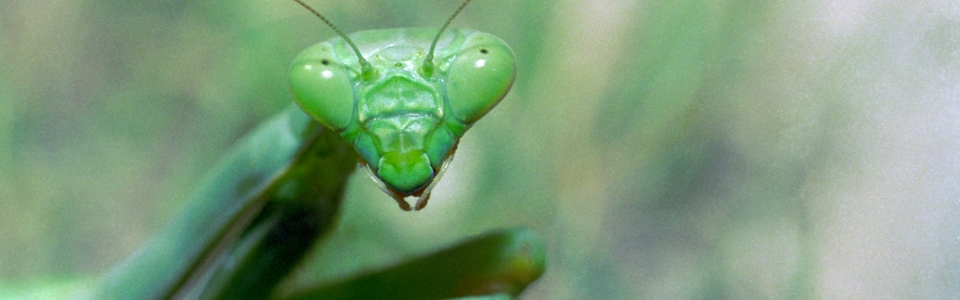
Praying Mantis (S. Davidson), Coachwhip Masticophis flagellum (I. Murray), CERIA (J. Mygatt) |
|
|